Right-of-way clearing is the removal of trees, brush, and overgrowth from a linear corridor — a utility easement, a pipeline route, a road frontage, or a private access lane — so the infrastructure inside it stays safe, visible, and reachable. Its clearing is measured in feet of length, not acres. And on most properties, the strip belongs to the owner, not the utility.
That last part surprises nearly everyone we walk a property with. Here’s what actually applies to the corridor running behind your house or across your acreage.
What Is Right-of-Way Clearing?
What is right-of-way clearing? Right-of-way clearing is vegetation removal along a defined corridor to protect utility lines, pipelines, roadways, or access routes. Crews cut a set width along a set length, keeping woody growth away from conductors, pipes, and sightlines while the surrounding property stays untouched.
The work differs from general land clearing in shape and in purpose. A land clearing job opens a block of ground. A right-of-way job cuts a ribbon through it, and the edges of that ribbon come from a recorded easement document, not from where the brush happens to stop.
Did you know? Duke Energy gives property owners in Ohio, Kentucky, and Indiana a minimum of 14 days’ notice before planned pruning — nearly five times the three-day notice it gives in the Carolinas and Florida. If a door hanger shows up, you have time to plan around the work, not react to it.
Who Owns the Corridor, and Who Has to Clear It
This is the part that catches property owners off guard. An easement is a right of access, not a transfer of ownership. You still own the ground under the power line behind your fence. You still mow it, still pay tax on it, and still carry liability for what happens on it.
The utility’s obligation is narrower than most people assume. Duke Energy’s easement rights cover managing vegetation that threatens the reliability of the line and keeping the corridor free of encroachments. That’s a safety standard, not a landscaping standard.
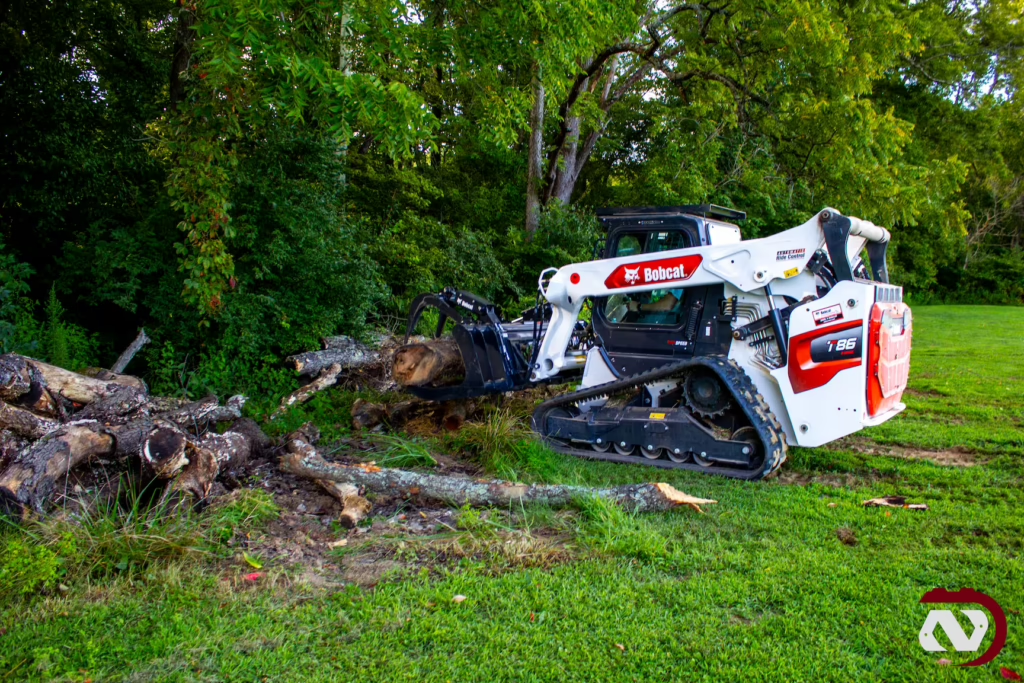
Cleanup follows the same logic. In maintained areas — lawns, landscaped ground, working farmland — small limbs and brush are normally disposed of, while larger wood is typically cut into 18- to 24-inch lengths and left stacked on site. In unmaintained wooded stretches, pruned vegetation and wood are left in place to break down naturally. Either way, nobody is pulling stumps or handing back a mowable surface.
Pro Tip: Pull your deed and read the easement language before you assume anyone else is clearing that strip. The recorded width tells you exactly how much ground is subject to utility access, and everything outside that line is entirely your call.
When Property Owners Actually Need It
Four situations drive most right-of-way calls in Greater Cincinnati and Northern Kentucky.
Overgrown utility easements. The corridor was cleared on a cycle years ago and Ohio’s honeysuckle and multiflora rose closed it back in. Nothing threatens the line yet, so nobody is coming.
Access roads and driveways. A long rural drive narrows year over year. Ohio Fire Code sets 20 feet of unobstructed width and 13 feet 6 inches of vertical clearance for fire apparatus access roads, and a canopy that’s crept in over a decade quietly fails both.
Pipeline and fiber corridors. Federal rules under 49 CFR 192.705 require gas transmission operators to run a patrol program observing surface conditions on and adjacent to the right-of-way. Ground you can’t see is ground nobody can inspect.
Road frontage and sightlines. Brush at an intersection or driveway apron becomes a visibility problem long before it becomes a legal one.
| Corridor type | Typical width | Who maintains it |
| Distribution power line | At least 20 feet | Utility, to line-safety standard only |
| Transmission line | 68–100 ft (44–115kV); 125–150 ft (230kV) | Utility, on a set cycle |
| Gas or fiber easement | Set by the recorded agreement | Operator, for access and inspection only |
| Private access road | 20 ft minimum under Ohio Fire Code | Property owner, entirely |
| Road frontage | Varies by jurisdiction | Owner, up to the public ROW line |
What Utility Crews Won’t Do — and Why We Get the Call
We don’t take tree work around live conductors. That belongs to line-clearance qualified crews, and it isn’t a scope we’ll blur for the sake of a bigger invoice. What we handle is everything else in the corridor: the understory, the saplings, the fence-line growth, the stumps, and the surface left behind once the utility’s trucks pull out.
That split is where the frustration lives. An owner watches a crew work the corridor for two hours, then walks out to find stacked wood and a strip that still can’t be mowed. The line is safe. The property isn’t usable. Both are true at once.
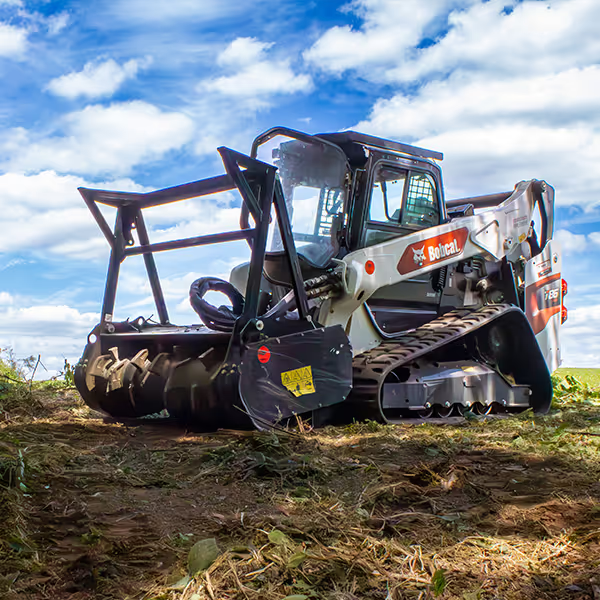
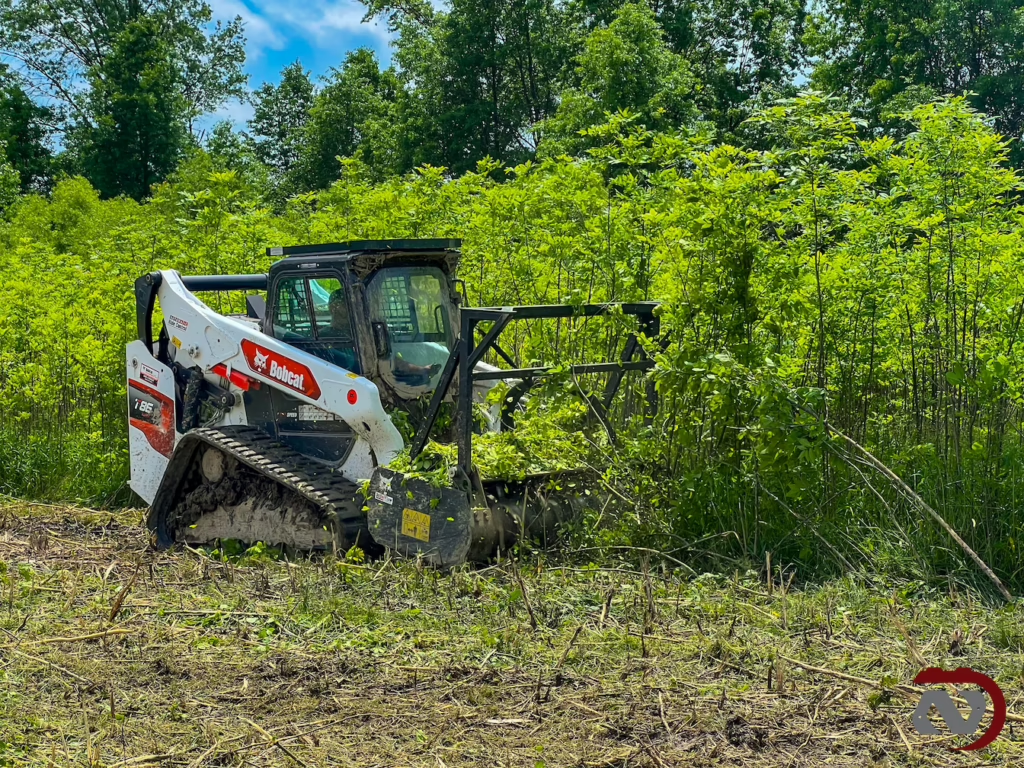
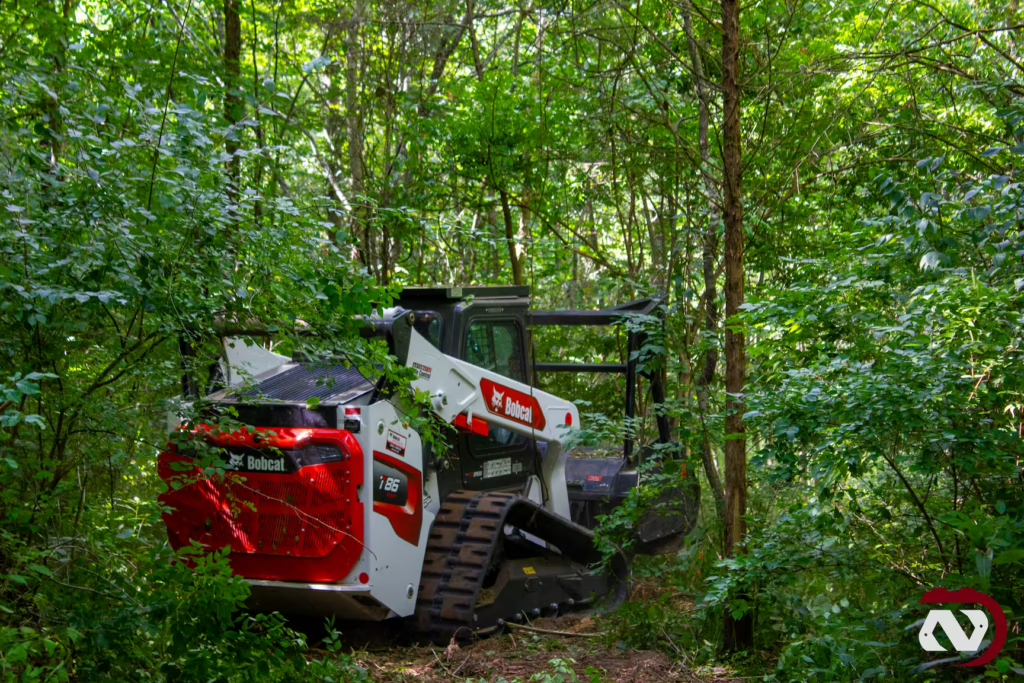
For most corridors we run forestry mulching rather than cut-and-haul. A mulcher works a narrow line without staging debris piles along a neighbor’s fence, and the mulch layer holds soil on the slopes and creek edges that Cincinnati corridors love to cross. The reasoning behind that choice is broken down in our complete guide to land clearing.
Did you know? Ohio’s 811 law defines excavation as moving earth or rock to penetrate the earth, and requires notice at least 48 hours and no more than 10 working days ahead. Mulching above grade often falls outside that. Pulling stumps or reshaping the corridor does not — and the duty sits with whoever runs the machine, not the landowner who hired them.
Corridors are also where private utilities hide. OUPS marks member facilities only. It does not mark the septic lateral, the invisible fence, the old irrigation run, or the propane line to the barn — exactly the things buried under a strip nobody has touched in eight years. Those get walked separately with the owner before a machine moves.
Pro Tip: Ask any contractor how they handle regrowth. Woody growth returns fast in this climate, so planning a maintenance pass into the budget upfront costs far less than re-clearing a fully closed easement later.
Get the Corridor Scoped Before Anyone Cuts
Right-of-way clearing looks simple from the road, and it isn’t. The easement sets the width, the buried lines set the depth, and the goal — mowable, drivable, inspectable — sets the method. Settling those three before equipment arrives is the whole job.
Nickell Construction Solutions clears utility easements, access roads, pipeline corridors, and road frontage across Cincinnati and Northern Kentucky, and every project starts with a site walk instead of a phone quote. Explore our Landworks & Earthworks services or contact us for a free site assessment at 513-822-4023. We’ll read the easement with you and tell you plainly which part of that strip is ours to clear and which part isn’t.
Frequently Asked Questions
What is right-of-way clearing? Right-of-way clearing removes trees, brush, and overgrowth from a defined corridor such as a utility easement, pipeline route, access road, or road frontage. The goal is safe clearance and reliable access, measured by corridor length and width rather than acreage.
Who is responsible for clearing a utility easement in Ohio? The property owner still owns the ground under an easement. Utilities manage only vegetation that threatens their lines, so understory brush, stumps, and general usability typically remain the owner’s responsibility.
Do I need permission to clear a right-of-way on my property? Usually not for vegetation you own, but Ohio law requires 811 notice before stump removal or any work that penetrates the earth. Easement terms may also limit what you plant or build there.
How is right-of-way clearing different from land clearing? Land clearing opens a block of ground for building or farming. Right-of-way clearing cuts a narrow, defined corridor to a set width, which changes the equipment, the access plan, and how the work is priced.
How wide does a private access road need to be? Ohio Fire Code calls for at least 20 feet of unobstructed width and 13 feet 6 inches of vertical clearance on fire apparatus access roads. Overgrown driveways commonly fall short of both without the owner realizing it.